%202.png)


%202.png)
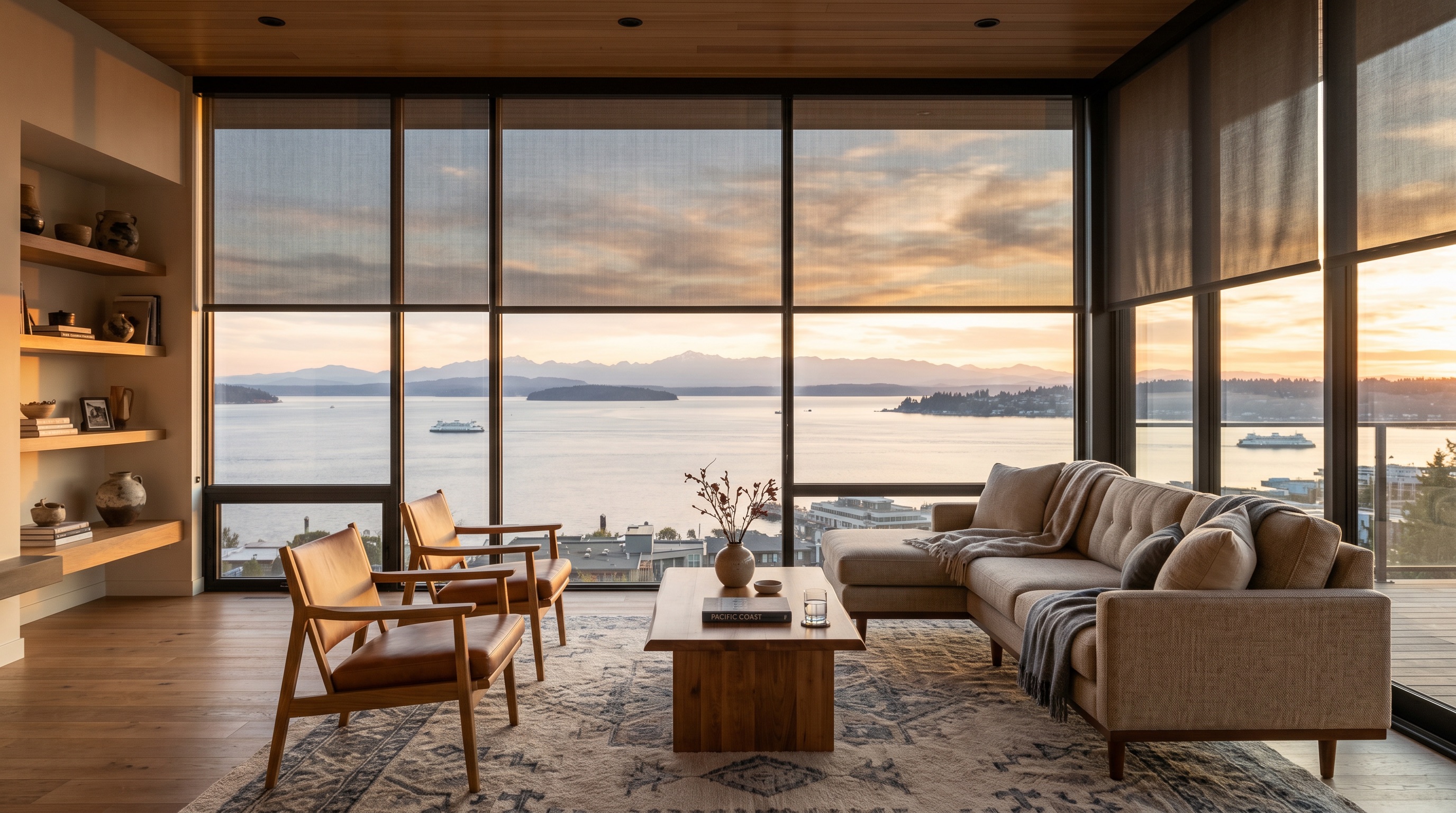
If you have ever had to close every blind in the house at 7 pm just to watch TV, you already know the Seattle summer problem. Our summer sun sits low and stays out late, and on a clear July evening the light pouring through west-facing windows can be blinding. Solar shades are built for exactly this. They cut glare and heat without making you choose between comfort and your view of the Sound, the lake, or the backyard.
Here is a straight guide to how solar shades work, what to look for, and where they earn their keep in a Seattle home.
Two things make our summers tough on interiors. First, the sun is up for a long time, with daylight stretching past 9 pm in June and July. Second, that late sun comes in at a low angle, which means it drives straight through west and southwest windows rather than over the roof. Homes facing Lake Washington, Puget Sound, or an open western view get the worst of it: hot afternoon rooms, washed-out screens, and furniture that slowly fades.
Heavy drapes solve the glare but kill the view and the daylight you waited all winter for. Solar shades take a different approach.
A solar shade is a single panel of tightly woven screen fabric on a roller. Instead of blocking light completely, the weave filters it. You still see outside, but the harsh glare, a large share of the heat, and almost all of the damaging UV are cut down before they reach the room. Think of them as sunglasses for your windows.
The most important spec is the openness factor, written as a percentage. It describes how tight the weave is.
One thing to know going in: solar shades give daytime privacy but not nighttime privacy. After dark, when the lights are on inside, people outside can see in. For bedrooms or street-facing rooms, many Seattle homeowners pair a solar shade with a room-darkening shade behind it.
This is the headline benefit. A 3 to 5 percent solar shade takes the edge off direct afternoon sun so you can actually see your screens, read, or work without squinting. You get to leave the shade down and still enjoy the daylight.
By stopping a big portion of solar energy at the glass, solar shades keep west-facing rooms noticeably cooler in the late afternoon. In a region where plenty of homes still have no air conditioning, that comfort difference during a heat stretch is real, and it eases the load on any cooling you do run.
Solar screen fabrics block the large majority of UV rays. That protects hardwood floors, rugs, artwork, and upholstery from the slow fade that direct sun causes over the years. If you have invested in nice furniture near a sunny window, this alone can justify the upgrade.
Solar shades are not for every window, but in the right spots they are hard to beat:
For a deeper look at energy-focused options, our Seattle cellular shades guide is a useful companion, since cellular shades trade view for stronger insulation.
Solar shades and motorization are a natural match. Sun-facing windows are often the tallest and hardest to reach, and the whole point is to adjust them as the sun moves. Motorized shades let you set a schedule so they lower automatically during peak afternoon sun and raise again in the evening, all from your phone or a voice assistant. They also remove the cords, which is safer for homes with kids and pets.
This is a good month to make that call. We are running our Summer Savings on Motorization promotion, so if you are weighing motorized solar shades for those west-facing windows, the upgrade costs less right now. Ask us about current pricing when you book.
If you want the full breakdown on powered options, see our motorized blinds guide for Seattle.
Not sure solar is the right pick? Here is the quick comparison. Solar shades win on glare control with a kept view. Cellular shades win on insulation but block the view when closed. Roller and roman shades offer more decorative fabric choices but less specialized sun screening. Many homes use a mix, room by room. Our blinds vs shades comparison walks through how to choose.
No. You can see out during the day while glare and heat are cut down. The lower the openness percentage, the more filtered the view becomes, but you keep a clear line of sight outside.
They provide daytime privacy only. After dark with interior lights on, people outside can see in. For full privacy, pair a solar shade with a room-darkening or blackout shade.
Yes. By stopping much of the sun's heat at the window, they keep sun-facing rooms cooler in the afternoon, which is a meaningful comfort gain in Seattle homes without strong cooling.
For strong afternoon sun, a 3 to 5 percent openness gives the best glare and heat control while still keeping a usable view. For less direct windows, 5 to 10 percent offers a clearer view.
Price depends on window size, fabric, and whether you motorize. The best way to get an accurate number is a free in-home consultation, where we measure and show you fabric and openness samples in your own light.
The right openness factor looks completely different in a north-facing kitchen than a west-facing living room, which is why we bring samples to you. Book a free consultation and we will measure your windows, show you how each fabric handles your light, and give you a clear quote. Call Seattle Blinds at (425) 222-2225 or request your free consultation online.
.png)
