%202.png)


%202.png)
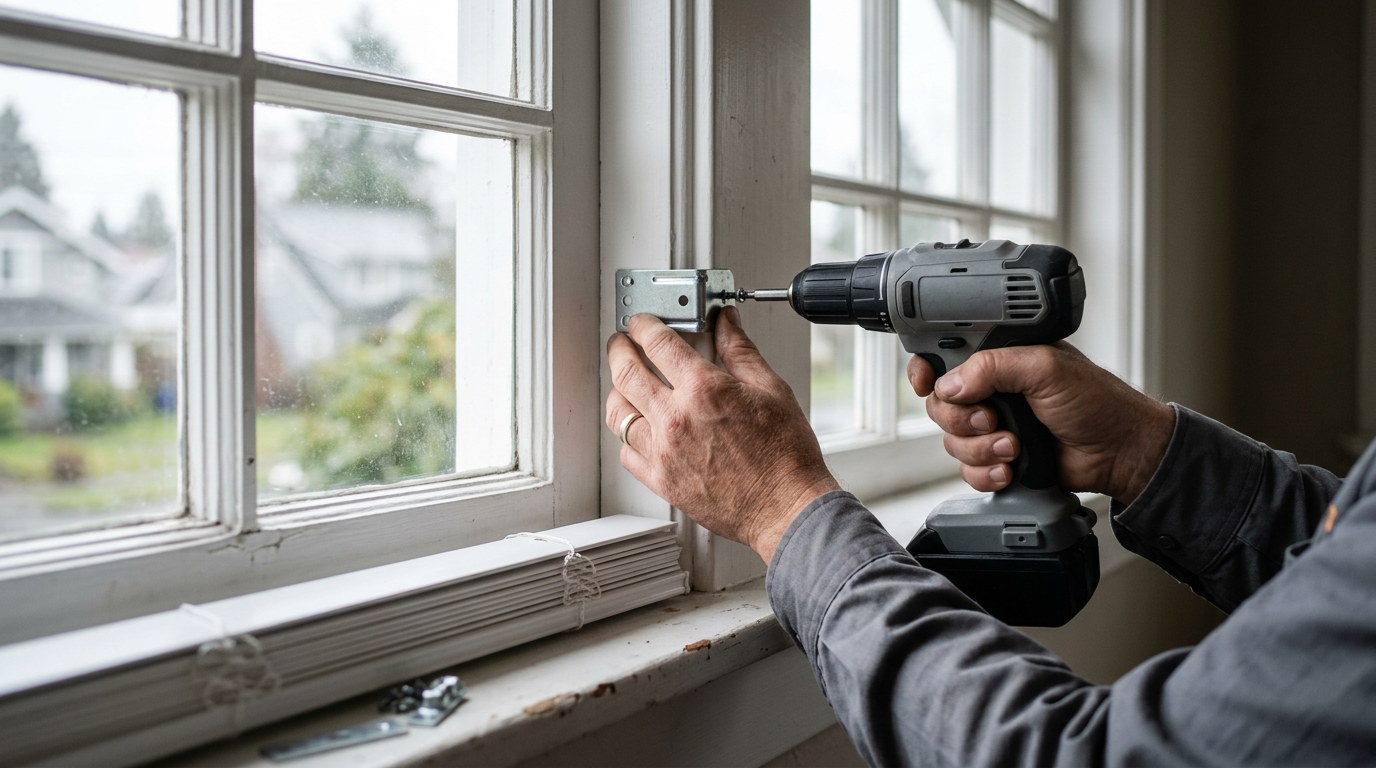
A typical Seattle install runs two to four hours for a whole house and is done in one visit. Measuring happens weeks earlier, at the consultation, and it is the step that determines whether anything fits. Installation is usually included in the price you were quoted rather than billed separately.
If someone quotes you for blinds without measuring your windows first, that is the moment to walk away.
1. The consultation, in your home. Someone comes out, looks at the actual windows, and measures every one of them. This is also where you see samples in your own light, which matters more in Seattle than most places. A fabric that looks warm in a showroom can look grey in a north facing room in November.
2. The quote. Window by window, with installation included. If installation is a separate line, ask why.
3. The order and the wait. Custom window coverings are made to your measurements, so there is a genuine manufacturing lead time. Two to four weeks is normal. Specialty products and unusual sizes run longer. Anyone promising custom blinds in a few days is either not making them custom or has them sitting in a warehouse in standard sizes.
4. Installation day. One visit, usually two to four hours for a full house. Fewer windows, less time.
Installers arrive with the coverings, the brackets, and their own tools. For each window they mark and fit the brackets, mount the covering, check that it sits level, and test the operation through its full travel.
They should also:
You do not need to be home for every minute of it, but be there at the end for the walkthrough. It is much easier to say "that one sits crooked" while the installer is still holding a drill.
A covering that does not fit. If it was professionally measured, this is the company's problem to fix at their cost, including remaking the unit. This is the single strongest argument for professional measuring over doing it yourself. Measure it yourself and get it wrong, and the remake is yours to pay for.
Windows that are not square. Very common in older Seattle housing stock, and completely normal in anything pre war. A good installer measures at multiple points and orders to the tightest dimension. This is exactly the kind of thing that gets missed on a phone quote.
Plaster and tile. Older homes and bathrooms need the right anchors. Ask in advance if you have either, so the installer arrives with what they need rather than making a trip to the hardware store.
Inside mount with no depth. Some windows physically cannot take an inside mount. A measurer catches this on the consultation. An online order finds out on installation day.
In most cases, nothing extra. Custom window covering pricing normally includes measuring and installation, and that is how we quote.
Where you do see separate installation charges is on coverings bought online or from a big box store, where you are hiring an installer for something they did not measure and did not order. That is a harder job with worse outcomes, and installers price it accordingly.
The genuinely expensive path is measuring wrong on a custom order. There is no warranty for that.
Most motorized shades now use rechargeable battery motors, which install exactly like a manual covering with no electrical work. If you are hardwiring, which mostly makes sense during a remodel or new build, that gets coordinated with your electrician before the walls close up.
Smart home integration happens after the physical install, and it usually takes another twenty minutes. More detail in our motorized blinds cost guide.
For what it is worth, our answers are: we measure, installation is part of the job, a misfit we measured is ours to remake, and it is our own crew every time.
The answers separate companies more reliably than price does.
Everything above starts with someone standing in your house with a tape measure. It is free, it takes under an hour, and nothing gets ordered until you have seen a quote.
Book a free in home consultation
Two to four hours for a typical whole house, done in a single visit. A few windows take under an hour. The time goes into fitting brackets accurately and testing each covering through its full travel, not into the mounting itself.
Usually yes. Custom window covering quotes normally include both measuring and installation. Separate installation charges are more common when you have bought coverings online or from a big box store and are hiring an installer separately.
No, if you are ordering custom. Professional measuring means a covering that does not fit is the company's cost to remake. Measure it yourself and the remake is yours. Older Seattle windows are also frequently out of square, which is easy to miss.
Two to four weeks is normal, because custom coverings are manufactured to your specific measurements. Specialty products and unusual sizes take longer. Same week availability generally means stock sizes rather than custom.
Usually not. Most motorized shades use rechargeable battery motors and install like any other covering. Hardwiring is an option worth considering during a remodel or new build, and that gets coordinated with your electrician beforehand.
If the company measured, they remake the covering at their own cost. That is the point of professional measuring. Get the measurements from a third party or do them yourself, and responsibility for a misfit sits with whoever measured.
.png)
