%202.png)


%202.png)
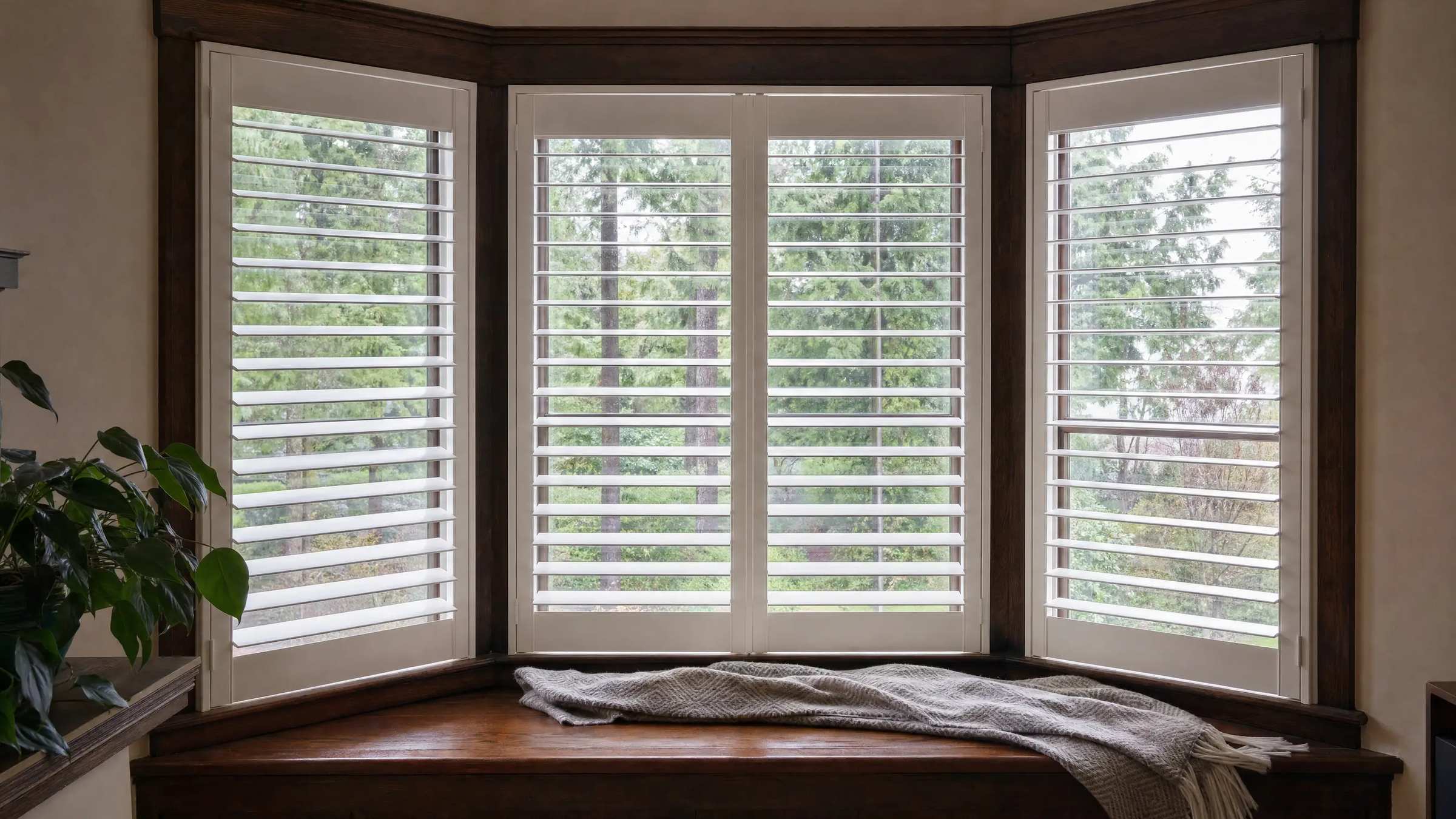
Plantation shutters hold up especially well in Seattle for two reasons most window treatments don't share: they're built into the window frame rather than hung in front of it, and the moisture-resistant materials handle a rainy climate without warping. Seattle Blinds carries hardwood, hybrid, and Palm Beach Polysatin shutters, each suited to a different mix of rooms and homes across the greater Seattle area.
Seattle's climate puts more pressure on a window covering than most parts of the country. Long stretches of damp weather mean condensation on glass is a regular occurrence, not an occasional one, and that changes which material makes sense where. Polysatin shutters are purpose-built for that moisture, which is why they're the standard recommendation for bathrooms and kitchens here, not just the humid rooms in a drier climate. Hybrid shutters split the difference: a wood-grain look with more resistance to that same dampness, which makes them a popular fit for Eastside homes from Bellevue to Sammamish and Issaquah where the wood aesthetic matters but the climate still asks for durability.
None of this rules out real wood. Hardwood shutters bring genuine warmth to living rooms and bedrooms, and they're especially at home in Seattle's older neighborhoods like Capitol Hill, Madrona, and Magnolia, where craftsman-era character calls for a material that matches it. The tradeoff is the one you'd expect: hardwood wants a dry room. Living rooms, bedrooms, and dining rooms away from steam and splash are where it belongs. Bathrooms and kitchen sink windows are where polysatin or hybrid takes over instead.
A meaningful share of Seattle's housing predates modern construction tolerances, and older homes settle over the decades in ways that shift window openings out of true square. That's a real problem for an off-the-shelf window covering, which is built to a standard size and doesn't account for it. Shutters don't have that issue, because each panel is custom measured and built to the exact opening it's going into, gaps and all. Our own crew handles that measuring and the install, and the fit is guaranteed as part of the job, arches and angled openings included.
Louvers across the hardwood, hybrid, and polysatin lines run from smaller, more traditional widths up to larger panels. Older Seattle homes with more modest window proportions tend to look right with a narrower louver, matching the scale of the house itself. Eastside new construction, where windows tend to run bigger, generally calls for the wider louver option instead, since a narrow louver can look almost fussy on a large expanse of glass. The right size is really a function of the window's own proportions as much as personal taste, and it's easiest to judge with actual samples held up to your specific window rather than guessed at from a catalog photo.
Seattle's overcast season is long, and one thing plantation shutters do well that curtains and most shades don't is give you precise, incremental control over a low, flat light source. Tilted louvers let you dial in exactly how much of that light gets into the room rather than an all-or-nothing choice, which matters more on a gray January afternoon than it does somewhere with harsher, more consistent sun. On the flip side, during the long summer evenings, the same louvers close down to cut glare and give you an actual dark room when you want one. Closed panels also add a layer of insulation against the chill that comes off single-pane and older double-pane glass in winter, on top of the light control.
Seattle's housing mix includes a fair number of non-standard window shapes: arched tops on older homes, angled openings in mid-century construction, and the wide picture windows common in newer builds designed to take advantage of a water or mountain view. A stock window covering generally can't handle any of these without an awkward workaround. Shutters are built to the exact geometry of the opening they're going into, arch and angle included, so a window that's never had a proper covering because nothing fit off the shelf is often the best argument for shutters rather than the hardest case against them.
Our own crew handles both the measuring and the installation on every shutter order, rather than outsourcing either step, and the fit is guaranteed as part of the job. That matters more with shutters than with most window coverings, since a shutter panel is manufactured to the measurement taken at the consultation and can't be trimmed or adjusted the way a blind sometimes can. Getting that first measurement right the first time is most of what makes the rest of the process go smoothly, and it's also why we don't recommend DIY measuring for a shutter order the way some homeowners might for a simpler product.
If you're weighing shutters against blinds you already own or are considering instead, we've written a direct comparison in shutters versus blinds: which is the better choice. The short version is that shutters cost more upfront, have no cord mechanism to wear out, and become a permanent fixture that adds to the look and resale value of the home.
Materials and louver sizes are hard to judge from a product photo, especially with a decision that comes down to how a shutter handles your specific rooms and your specific light. You can see the materials and louver sizes in person at our Redmond and Lynnwood showrooms. If a showroom visit doesn't fit your schedule, book a free in-home consultation and we'll bring the samples to your windows instead, measure the openings, and give you a real number based on your home rather than an estimate based on someone else's.
Plantation shutters are hinged panels with tilting louvers, built into your window's exact frame rather than hung in front of it. They cost more upfront than blinds because each one is custom manufactured, and they become a permanent fixture that adds to the home's resale value.
Polysatin shutters, since they're built to handle sustained moisture and won't warp, crack, or yellow the way wood can in a damp room. Hybrid shutters are a middle option if you want more of a wood look with added moisture resistance.
Yes. Each shutter panel is custom measured and built to your window's actual opening, including homes where the frame has shifted out of square over the decades, which is common in older Seattle housing stock.
Yes. Tilted louvers give precise, incremental control over low winter light in a way curtains and many shades don't, and closed panels add a layer of insulation against the cold coming off the glass.
You can see the shutter materials and louver sizes in person at our Redmond and Lynnwood showrooms. If that doesn't fit your schedule, a free in-home consultation brings the samples to you.
Yes, all shutter lines come with Hunter Douglas's manufacturer warranty, and our own crew handles measuring and installation on every order.
Shutters are more durable and add more resale value, since they're built into the frame rather than hung in front of it. For the full comparison, see our post on shutters versus blinds.
Have more questions? Seattle Blinds offers free in-home consultations across the greater Seattle area.
.png)
