%202.png)


%202.png)
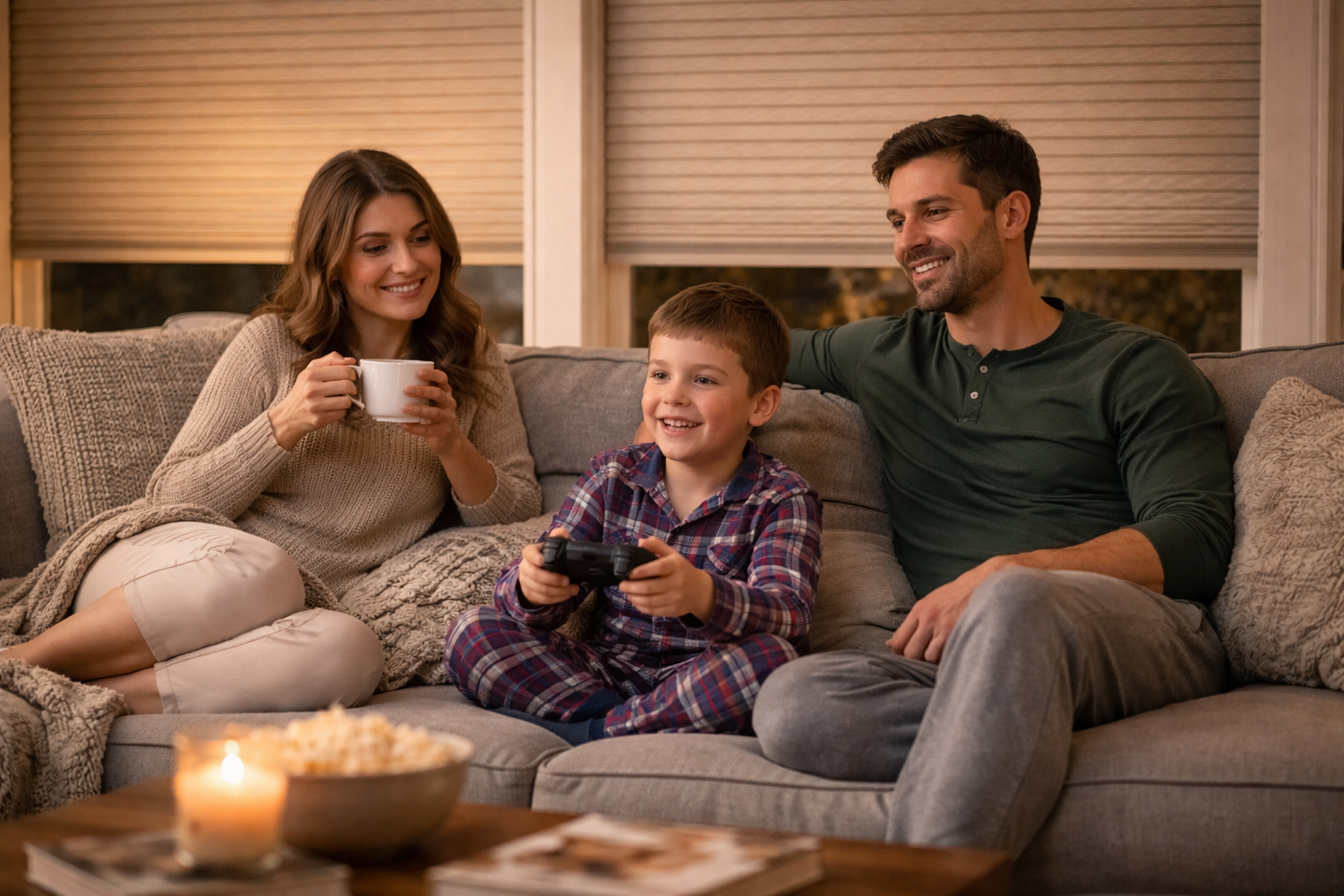
Winter in Seattle has a way of reshaping the day. Mornings feel dimmer for longer, and evening arrives early enough that lights come on before dinner. That shift changes how a home feels—especially in living rooms with big windows, street-facing spaces, or open layouts where daylight (and privacy) can be harder to manage.
Motorized window treatments offer a practical, low-effort way to keep up with winter light patterns. Instead of adjusting blinds and shades by hand multiple times a day, motorization makes it possible to schedule movement automatically—or control everything with a remote or phone. The result is a home that feels more comfortable, more consistent, and easier to live in during the darkest stretch of the year.
Motorized blinds and shades offer a built-in motor that raises, lowers, opens, or closes them using a remote, wall control, or app. Many homeowners also choose to automate their window coverings on a schedule, so the home adjusts itself throughout the day.
Short winter days create two common challenges: getting enough natural light when it’s available, and maintaining privacy and warmth once it’s gone. Combining motorization with automation helps solve both without adding extra steps to the day.
Winter daylight is limited, and the “best” light can happen while everyone is busy—during morning routines, meetings, or school drop-offs. With motorized automation, shades can be set to open at a set time each morning to capture daylight as soon as it’s available, then close near dusk when the sun drops.
This matters in Seattle because light can change quickly. Automating that adjustment keeps spaces feeling brighter without requiring constant attention.
Earlier sunsets mean interior lights come on sooner, which can make windows feel exposed—especially at street level. Motorized treatments can close automatically at the time privacy becomes important, without relying on someone remembering to do it every night.
That’s helpful for living rooms, front-facing bedrooms, and any space where privacy is a concern once the sky goes dark.
Many households notice how winter darkness can disrupt routines. Automated shades can create small anchors in the day—opening in the morning, adjusting at midday, closing in the evening—so the home feels more predictable even when the weather isn’t.
Winter comfort often comes down to efficiency and windows are one of the biggest culprits for allowing the outside temperature to impact your indoor comfort. Custom-fit blinds and shades can play a pivotal role in keeping things cozy and helping reduce your energy bill.
Motorized shades can support energy efficiency by following a simple pattern: open to take advantage of daylight and passive warmth, then close at night to reduce heat loss. That nightly closure is where automation shines—because it happens consistently.
Cellular shades (also known as Honeycomb) are a popular choice for Seattle winters because they’re designed to create insulating air pockets. When paired with scheduled closure, they can make rooms feel less drafty and more stable overnight.
Sliding doors and large picture windows are common throughout the Seattle area. Those features bring in light and views, but they can also introduce noticeable temperature swings in winter. Automated window treatments help ensure coverage is in place during the coldest hours—without having to think about it.
The “best” motorized option depends on goals: insulation, glare control, privacy, or a balance of all three. A few styles tend to be especially popular in winter.
Cellular shades are often chosen for bedrooms and living spaces where warmth and light filtering matter. They can soften harsh glare when the sun breaks through, while still preserving a cozy feel during long gray weeks.
For homes with view corridors—or rooms that get glare from low winter sun—roller shades and screen shades can help manage brightness without making the space feel closed off. Motorization makes them easy to fine-tune throughout the day.
Roman shades offer a tailored look that fits well in living rooms, dining rooms, and primary suites. Motorization adds convenience without changing the design aesthetic.
Hunter Douglas PowerView® Automation is built around scheduled, consistent control. Shades can be programmed to move at specific times or aligned with sunrise and sunset rhythms, which is especially helpful during winter when daylight windows are narrow and changing week to week.
PowerView can be controlled via an app, remote, and other options depending on the setup.
If you're also weighing smart-home compatibility, Seattle Blinds has a helpful breakdown in this post about finding the best smart home device for your motorized blinds, which covers practical considerations without overcomplicating the decision.
Motorization performs best when the window treatments are measured accurately, mounted correctly, and configured thoughtfully. Professional installation helps ensure smooth operation, proper alignment, and easy access for power or battery servicing over time.
Certified installers also help avoid common issues that can shorten the lifespan of motorized treatments, like binding, uneven movement, or improper mounting surfaces. In most homes, motorization is something that’s meant to be used daily—so getting the setup right from the start pays off.
At Seattle Blinds, we offer free in-home consultations so homeowners can compare fabrics, light control options, and motorization features in the actual space where the treatments will live. That’s often where the “right” solution becomes obvious—especially in winter, when privacy needs and light patterns are easier to observe.
Motorized window treatments are a practical winter upgrade because they help a home respond to changing daylight, temperature, and privacy needs automatically. The goal isn’t just convenience—it’s creating a home that feels brighter when daylight is available, more private when darkness arrives early, and more comfortable whether you’re watching your lounging on the sofa or tucked in bed on a cold night.
Schedule an in-home consultation or visit our showrooms in Lynnwood or Redmond to see Hunter Douglas’s motorization options today!
This article was written by Carly Zeller, Owner of Seattle Blinds. With a passion for interior design, Carly and her team help Seattle homeowners find stylish, functional solutions tailored to their unique spaces.
.png)
